
Essentials for industrial safety and site security!
Advanced systems monitor industrial sites, restrict hazardous zone access, and detect threats instantly. This equipment prevents occupational risks, protecting assets and personnel while minimizing manual oversight.

Workplace safety
Success relies on risk assessment, OSHA compliance training, and using certified protective equipment. Implementing lockout/tagout procedures ensures operational integrity.

Premises security
Strategies involve installing CCTV networks, perimeter motion sensors, industrial grade locks, and monitored alarm systems connected to emergency dispatch centers.

Cyber-physical security
Secure access control data via encrypted networks, anti-intrusion software, and cyber-shields preventing unauthorized system breaches.
Personal protective equipment:
a complete guide!
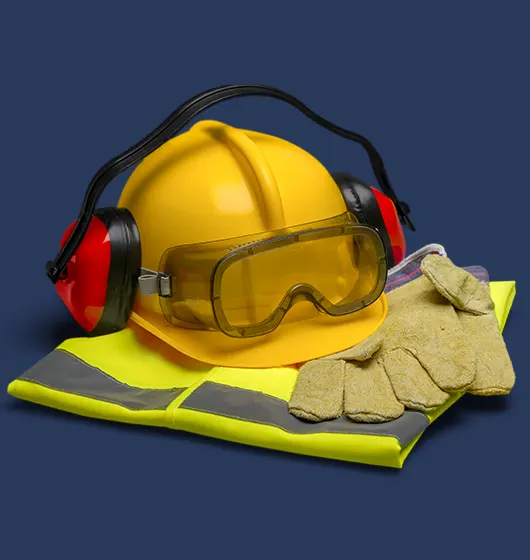
Personal protective equipment (PPE) is vital for hazard mitigation in manufacturing and construction environments.
Selection must include respiratory units, safety goggles, cut-resistant gloves, hearing defenders, and high-visibility apparel based on risk assessment. Gear must meet ISO standards, undergo maintenance, and ensure ergonomic fit.
Mandatory safety usage training guarantees equipment efficiency, shielding workforce health against occupational injuries and industrial accidents.

Video surveillance: what are
the regulations?
Compliance laws dictate CCTV visibility and signage. Footage retention follows strict schedules, restricted to security personnel, aligning with GDPR privacy protocols to block unverified retrieval.
Safety clothing: standards and recommendations
Workwear must satisfy EN ISO standards regarding chemical or thermal hazards. Apparel adapts to extreme conditions, requiring inspection cycles to maintain protective integrity.
Safety footwear
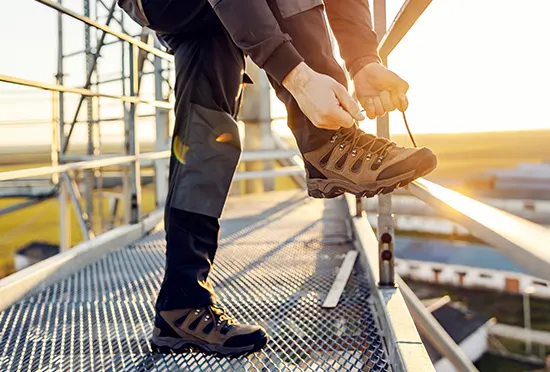
Select steel-toe boots guarding against impact, puncture-resistant midsoles, and anti-static soles to prevent slips or electrical discharge while supporting ankle stability.

Protective helmets
Hard hats must meet ANSI impact ratings, utilize dielectric materials like ABS plastic, and feature suspension harnesses for shock absorption.

Fire in the workplace: what you need
to remember!
During industrial fires, activate emergency lighting, utilize Class ABC extinguishers, automatic sprinklers, and keep fire doors unobstructed. Staff requires evacuation drills and first aid protocols.
Trigger manual call points immediately for emergency responders. Avoid fighting large blazes solo. System testing and smoke detector maintenance ensure rapid incident response.
Event security, a top priority
This demands crowd management strategies, perimeter access control, deploying certified guards, installing panic bars, and finalizing emergency egress routes.

Security gates
Walk-through detectors streamline entry screening by spotting ferrous items and contraband, preventing site breaches.

Identification wristbands
RFID wristbands ensure rapid authentication, guaranteeing only accredited personnel enter restricted zones.

Surveillance cameras
IP Cameras offer live remote monitoring, enabling suspicious behavior analysis and archiving forensic evidence.

Metal detectors
Handheld scanners locate concealed weaponry or hazardous objects during security checkpoints.


Industrial network security
Cyber-security relies on network segmentation, industrial firewalls defending SCADA systems, multi-factor authentication, and firmware updates closing vulnerability gaps.
Execute encrypted backups to prevent ransomware data loss. Train staff on phishing awareness. These protocols build resilience against corporate cyber-espionage.
Panorama of innovative security technologies
Advanced security ecosystems integrate AI analytics for automated threat recognition, retinal scanning for high-security access, and secure VPNs protecting sensitive data transmission.

Facial recognition
Matching biometric profiles against watchlists, this software strengthens facility entry, border control, and identity verification.
Surveillance drones
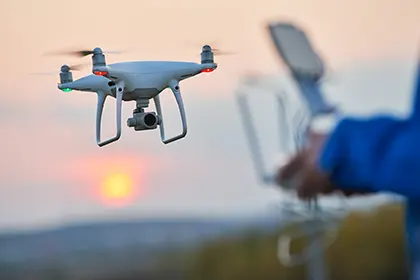
Equipped with thermal imaging and LIDAR, UAVs patrol large perimeters, detecting thermal anomalies or intrusions.

Biometric sensors
Fingerprint readers and iris scanners eliminate credential theft, ensuring high-assurance authentication.